 Reece Gypsy Magic / Reece Family Miniatures & Mini Gypsy
Blends is a premier horse breeding facility on the East Coast.
It is located in picturesque Clayton Delaware, with a State of the Art Show Barn.
RFM is a family run farm owned by Toni Reece and founded by the values that has made it an icon in the Miniature Horse industry.
FM bred Horses can be found in every corner of the world, attesting to the long standing quality of Toni’s breeding program.
Toni’s integrity & honesty and eye for a good horse is known throughout the industry. Repeat customers are common, and a sure sign of good, fair business practices.
It is all in the family at RFM.
Many of Toni’s children were also hit with the “horse” bug and continue to stay active in the Miniature Horse industry.
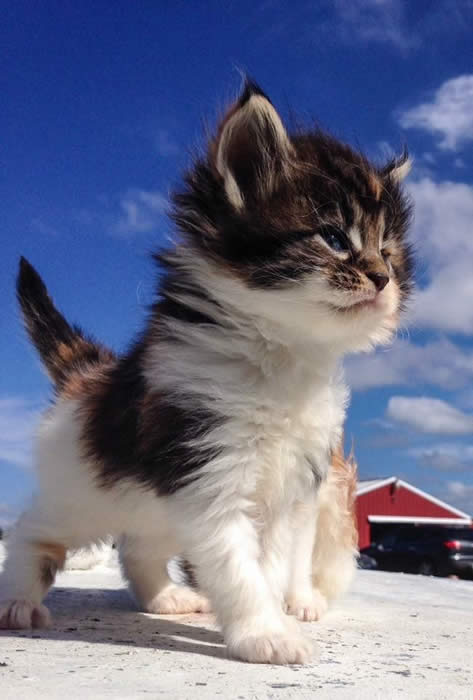
PLEASE VISIT OUR RFM MAINE COON CATS PAGES TO SEE AVAILABLE KITTENS FOR SALE!
HISTORY OF THE GYPSY VANNER/REECE GYPSY MAGIC
In 1996 Dennis and Cindy Thompson established the Gypsy Vanner Horse
Society. To understand the importance of the Thompsons’ work, and this
breed, one must know that hidden behind shrubs and under bridges; amid
the indiscriminate breeding practices that had caused the world around
the Gypsies to see any horse bred by them as nothing more than trade
horses for consumption; a breed had been developed and its story begins
here:
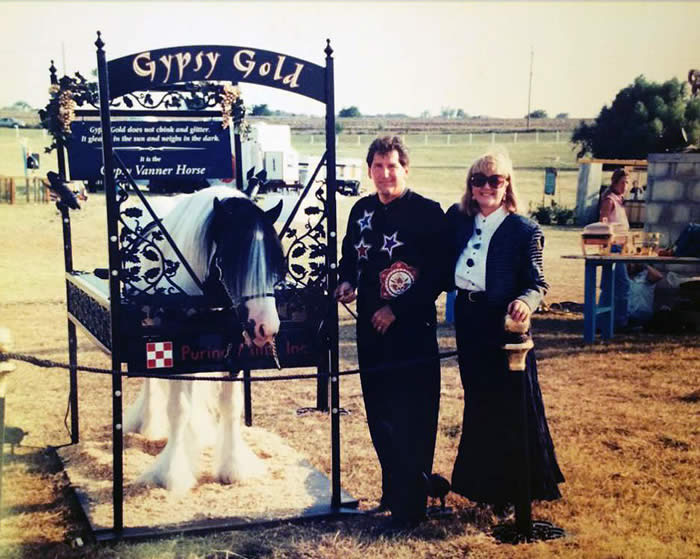
Founded November 24, 1996, the GVHS is the world’s first registry
to recognize a breed of horse developed by the Gypsies of Great
Britain/Ireland and the only such registry founded on an in depth study
of British/Irish Gypsies and their horses.
All breeds result from a crossing of breeds by someone or some culture
focused on creating a specific looking horse born from their dreamed
image – their vision. Once the ideal horse is achieved and recognized,
the basic function of a breed society is to protect, educate about,
perpetuate and promote the breed. With our breed and the magic it holds,
the opportunity is greater.
Soon after World War II, a vision was born by the Gypsies of
Great Britain to create the perfect caravan horse; “a small Shire, with
more feather, more color and a sweeter head” was the goal. Selective
breeding continued virtually unknown to the outside world for over half a
century until two Americans, Dennis and Cindy Thompson, while traveling
through the English countryside, noticed a magical looking horse
standing in a field. It was that very horse who became the key to
unlocking the heretofore-unknown vision and genetics that created the
Gypsies’ “vanner” breed (a horse suitable to pull a caravan). Be it good
fortune, good luck or pure Gypsy magic, a passion was born in the
Thompson’s to understand the little stallion that captured their
attention and stole their hearts. It would take years of research –
without the help of the Internet – to learn about this special horse
and, just as importantly, the colorful culture, which had created it.
Invited by the stallion’s owner, the Thompsons attended Appleby,
(the oldest horse fair for Gypsies in the world) with the sole purpose
of developing a better understanding of Gypsies and their horses. For
ten days they introduced themselves to every Gypsy who bought or sold a
quality looking horse and then documented contact information for later
pursuit. The discovery of that one special little stallion and ten days
turned a curiosity about Gypsies and their horses into an obsession. –
Dennis Thompson, GVHS Co-Founder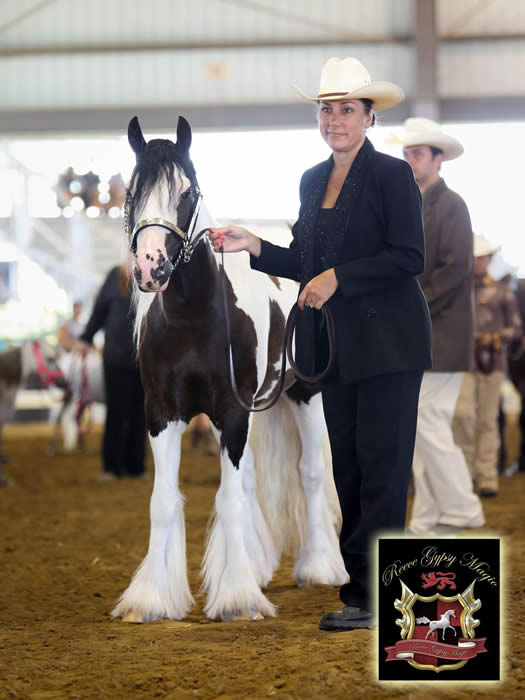
The Thompsons’ relentless pursuit of knowledge over four calendar years resulted in:
• Uncovering the post World War II vision from which the breed was born.
• Identifying “Sonny Mays” and “The Coal Horse” – the two foundation
stallions that inspired the Vanner breed – as well as much of the
influential stock originating from those two.
• Identifying the genetics that created the breed: The Shire, Clydesdale, Dales Pony and Friesian.
• Tracing the genetic heritage of “Cushti Bok” (the stallion they had discovered) through three countries.
Discovering that, as a yearling, Cushti Bok had been “the most highly
prized colt in all of Great Britain” at the same 300-year-old horse fair
where their quest for knowledge began.
• Naming the unnamed breed “Gypsy Vanner Horse”.
• Documenting the Vanner breed standard based on years of listening to
the spoken words of dedicated Gypsy breeders. Respecting the spoken
words of Gypsies who have dedicated lifetimes in the pursuit of their
dream is a commitment of the GVHS mission contained in its by-laws. Breed Standard
• Writing the mission statement of the Gypsy Vanner Horse Society. Mission Statement
• Developing the four goals of the GVHS. Goals
• Importing the first two Vanner fillies (Bat and Dolly) November 24th 1996.
• Importing the first two Vanner stallions (Cushti Bok and The Gypsy King) Easter Sunday 1997 and Easter Sunday 1998.
• Importing a total of fourteen mares and two stallions for the breed’s
introduction in June of 1998 at Equitana USA in Louisville Kentucky and
on the Internet. All other names and efforts to recognize a breed of
horse developed by Gypsies throughout the world came after.
Info courtesy of vanners.org
With an outstanding disposition, Vanner is known for his kind and
generous personality.
Easily trained and capable of most any discipline,
the breed is used for both driving and riding. The vision British
Gypsies had for their special caravan horse was that of a small Shire,
with more feather, more color and a sweeter head. With a short back,
heavy bone (flat at the knee) and broad chest and heavy hips, the
Vanner has a more refined head than most draft horses. Feather (hair on
the legs) is called an additive or cumulative gene and on the Vanner, it
begins at the knee on the front legs and at or near the hocks on the
hind legs, covering the front of the hooves. Only hairy legged horses
could have created the Vanner breed.
Colors include: Piebald (black and white), Skewbald (brown and
white), Blagdon (a solid color with a splash on the belly or more
profound splashes of white, often referred to as a splash Blagdon or
checkity horses), Odd Colored (described as any other color and white).
The most common colors derived from core genetics, but today exotic colors can also be found.
It is critical to remember the Vanner is not a color breed—it is a body type.
As breeders, we must be very cautious to not forsake body type and breed character for exotic colors
OUR HISTORY IN MINIATURE HORSES:
4Gs Little Kings Alfalfa Pleasure (also known as 'HAWK' because of his piercing blue eyes) was the cornerstone of RFM. Until his death in 2008, Hawk and a few of his select sons were the foundation of Reece Family Miniatures breeding program.
Hawk produced numerous World and National Champions, Futurity and Honor Roll Winners.
He was also Reserve World Champion in the Prestigious Get of Sire Class!! ( Tied for Champion).
Reece Family Miniatures is also the home to Danielle Hill Training Center, run by Danielle Hill (aka “Peas”), one of Toni’s daughters. Many of the Champion horses on Peas’ show string are products of RFM’s premier breeding program.
You can still see his prodigy winning in the show ring today.